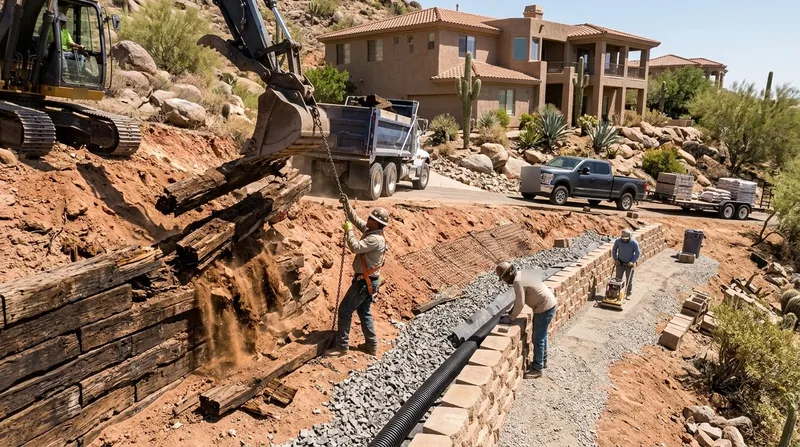




Railroad Tie Wall Replacement in Phoenix is one of the most common retaining wall jobs we see across the valley, and for good reason. Thousands of 1970s and 1980s homes in neighborhoods like Arcadia, Maryvale, and the foothills built their slopes and driveways with creosote-treated railroad ties, a cheap and fast solution that worked for decades. But under Phoenix's harsh sun, monsoon flooding, caliche-locked drainage, and relentless heat, those ties decay, lean, and fail. When a railroad tie wall starts to slump or collapse, it puts your driveway, foundation, and landscape at risk. We remove the old ties, haul them away, install proper drainage and gravel backfill, and rebuild your wall in segmental block, poured concrete, or natural stone. The result is a wall that handles Phoenix's climate and lasts 30 to 50 years or more.
Why Railroad Tie Walls Fail in Phoenix: The Desert Reality
Phoenix's desert climate and unique soil conditions create the perfect storm for railroad tie failure. The valley's caliche hardpan traps water at the base of walls, and when monsoon rains hit or flood irrigation soaks the footing, that moisture stays trapped. Termites thrive in the creosote-treated wood, especially in the warm months. Summer temperatures regularly exceed 115 degrees, which dries and cracks the ties from the outside while water damage rots them from within. Add in expansive clay pockets common in older Maryvale and central Phoenix lots, and you get walls that bow, lean, and eventually collapse.
- Caliche and hardpan lock drainage and trap water at the wall base, causing rot and structural failure.
- Termites and wood-boring insects consume ties from the inside, especially in hot months when activity peaks.
- Extreme heat cycles crack and split wood, while UV exposure degrades the creosote coating.
- Monsoon flooding and flash runoff erode backfill and undermine wall footings in wash-side and slope properties.
- Expansive clay in the soil pushes outward against the wall, forcing it to bow and lean over time.
These failure modes are specific to the Phoenix climate and soil profile, and they are why we replace so many aging railroad tie walls every year.
Key info: A leaning or bowing railroad tie wall is not a cosmetic issue. It signals that the footing has shifted, drainage has failed, or the soil behind it is pushing outward. Waiting for it to collapse puts your driveway, patio, or home foundation at risk. See our Leaning and Collapsed Wall Repair page for emergency guidance.
For detailed permit and regulatory requirements in Phoenix, visit the City of Phoenix Development Services to confirm setback rules and wall height thresholds for your specific lot.
How We Replace Your Railroad Tie Wall: The Phoenix Process
Our approach to railroad tie wall replacement is methodical and site-specific. We start with a site visit to assess the wall height, soil conditions, drainage behind the wall, and proximity to structures or property lines. We then pull the necessary permits if your wall is over 4 feet from the footing or supports a surcharge like a driveway. We remove the old ties, haul them away responsibly, excavate and level the footing, install a gravel and drainage base, and rebuild in the material that works best for your lot and budget.
- We inspect the existing wall, soil, and drainage to determine the root cause of failure and the best replacement strategy.
- We obtain any required permits from the City of Phoenix or your local jurisdiction before any demolition begins.
- We remove and haul away all creosote-treated railroad ties and old backfill material.
- We excavate and compact the footing to proper depth and grade, accounting for Phoenix caliche and clay layers.
- We install a perforated drain pipe at the base and backfill with clean gravel to ensure water drains away from the new wall.
- We rebuild the wall in segmental block, poured concrete, or natural stone, depending on your aesthetic and budget needs.
- We compact and grade the backfill, and finish the top of the wall with appropriate coping or cap stone.
The entire process, from demolition to final grading, typically takes 3 to 7 days depending on wall length and height.
Example: A homeowner in Arcadia had a 35-foot railroad tie wall along her driveway that was leaning badly after a monsoon season. We removed the ties, discovered caliche at 18 inches, installed a 24-inch footing with a drain pipe, and rebuilt with segmental block. The new wall is level, drains properly, and will support her driveway for decades. Total time on-site: 5 days.
Replacement Materials and Methods for Phoenix Walls
| Approach | Description | Best for |
|---|---|---|
| Segmental Block (SRW) | Interlocking concrete blocks stacked and backfilled with gravel, no mortar. Absorbs minor soil movement and drains well. | Most Phoenix jobs. Budget-friendly, durable, low maintenance. Works on slopes and driveways. |
| Poured Concrete | Monolithic reinforced concrete wall, often stucco-finished to match existing structures. Extremely strong and long-lasting. | Tall walls (6+ feet), high-load situations, homes in Spanish Revival or stucco-heavy neighborhoods like Encanto or Willo. |
| Natural Stone or Boulder | Native Arizona granite or stacked boulders, mortared or dry-stacked. Blends seamlessly with desert landscape and foothills terrain. | Hillside and foothills properties, desert landscaping, homes seeking rustic or high-end aesthetic. Common in Ahwatukee and Moon Valley. |
| Timber (New) | Pressure-treated lumber or composite timber, installed with proper drainage and footing. Not creosote, and engineered for better longevity. | Homeowners who prefer the rustic look of the original wall but want modern durability. Requires good drainage in Phoenix climate. |
See our Block and Segmental Retaining Walls and Concrete Retaining Walls pages for deeper material breakdowns and photos.
Railroad Tie Wall Replacement Cost in Phoenix: What to Expect
The cost of railroad tie wall replacement in Phoenix typically starts at $35 per square foot for a straightforward segmental block rebuild on a level lot with good access. That figure accounts for demolition, haul-away, proper footing preparation, gravel drainage base, block installation, and backfill. However, several factors push the cost up or down on your specific job.
Wall height is the biggest driver. A 4-foot wall costs less per linear foot than a 6-foot or 8-foot wall, because taller walls require deeper footings, more blocks or concrete, and often engineered drawings. Soil conditions matter too. If we hit caliche or expansive clay that requires extra excavation or a thicker footing, labor and materials increase. Access affects pricing. A wall tucked in a tight backyard or on a steep slope takes longer and may require specialized equipment. Material choice also moves the needle. Segmental block is the most economical. Poured concrete runs higher. Natural stone or boulders are premium. Proximity to structures, HOA requirements, and permit complexity can add cost as well.
The best way to get an accurate price is to request a free estimate. We visit your site, measure the wall, assess the soil and drainage, and provide a detailed proposal within 24 hours. Most jobs in Phoenix range from $4,000 to $15,000, but a very long or tall wall can easily exceed that. See our full pricing page for more examples and breakdowns by material and wall height.
Railroad Tie Wall Replacement Near Me: What Phoenix Homeowners Should Know Before Hiring
Choosing the right contractor for your railroad tie wall replacement is critical. You are not just paying for labor and materials, you are paying for someone who understands Phoenix soil, drainage, and building codes. A poor job will fail again in a few years. A good job lasts 30 to 50 years. Here is what to look for.
- Verify that your contractor holds a current Arizona Contractor License and carries liability and workers compensation insurance.
- Ask for and check at least two to three references from recent wall replacement jobs in Phoenix or your neighborhood.
- Confirm that your contractor understands local permitting. Many walls over 4 feet or supporting a surcharge require a City of Phoenix permit.
- Get written estimates from at least two contractors. Compare not just price, but material, footing depth, drainage design, and warranty.
- Ask about drainage design. A good contractor will explain how water will drain away from the new wall and why that matters in Phoenix.
- If your property is in an HOA, check the CC and Rs for wall material restrictions or architectural review requirements before you commit.
- Never pay the full amount upfront. Standard practice is a deposit to secure the job start, and final payment on completion.
A licensed, insured contractor who takes time to inspect your site, explain the soil and drainage issues, and provide a detailed written estimate is worth the conversation. Call us at (480) 494-4792 or contact Phoenix Retaining Wall online for a free no-obligation estimate and a straightforward conversation about your wall.
Railroad Tie Wall Replacement in Phoenix: Pricing Guide
| Service | Price | Details |
|---|---|---|
| Segmental Block Wall Replacement | Starting at $35/sq ft | Demolition, footing prep, drainage, block installation, backfill. Most common Phoenix choice for budget and durability. |
| Poured Concrete Wall Replacement | Starting at $50/sq ft | Reinforced concrete, footing, stucco finish optional. Higher cost reflects strength and longevity for tall or high-load walls. |
| Natural Stone or Boulder Wall | Starting at $60/sq ft | Arizona granite or stacked boulders, mortared or dry-stacked. Premium material and labor for foothills and desert aesthetic. |
| Engineered or Complex Walls | On estimate | Walls over 8 feet, tiered systems, or challenging soil require site inspection, soil testing, and engineered drawings before pricing. |
| Travel and Mobilization | Included | No mileage fee or travel surcharge within Phoenix and surrounding service areas. We cover it as part of the job. |
| Free Estimate | Free | Site visit, measurement, soil assessment, and written proposal. No obligation. Response within 24 hours at (480) 494-4792. |
Indicative pricing, the exact cost depends on square footage, finish, and site access. Free personalized estimate within 24h at (480) 494-4792.


