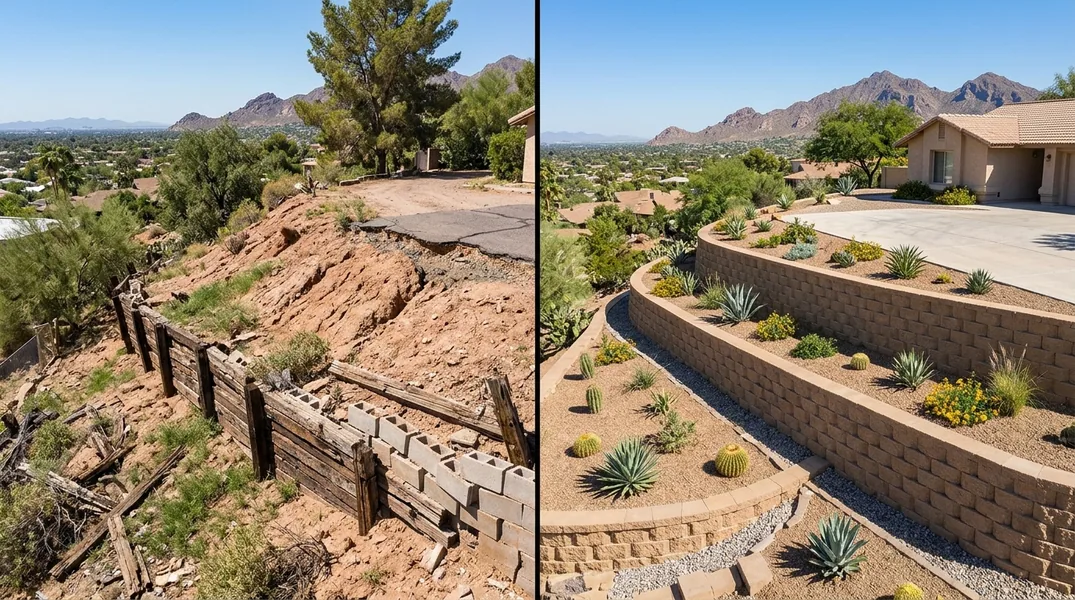
Understanding Phoenix's Unique Soil and Terrain Challenges
Building a retaining wall in Phoenix isn't like building in other parts of the country. The desert landscape presents distinct challenges that homeowners and contractors must address from the very beginning of any Retaining Wall Installation project. The most significant obstacle is caliche, a hard, calcium carbonate-rich layer that forms just below the soil surface throughout much of the Phoenix metro area. This dense, concrete-like material can make digging, grading, and foundation work extremely difficult and expensive if not properly planned.
Beyond caliche, Phoenix's desert hillside lots present steep grades, loose soil composition, and intense sun exposure that can degrade certain materials over time. The combination of extreme heat, minimal rainfall, and the region's expansive clay soils means that retaining walls must be engineered to handle both structural stress and environmental factors. Choosing the right material isn't just about aesthetics; it's about durability, cost-effectiveness, and long-term performance in Arizona's harsh climate. Understanding these local conditions will help you select a retaining wall material that will stand the test of time.
Concrete Retaining Walls: Durability and Strength in Desert Conditions
Concrete Retaining Walls are one of the most popular choices for Phoenix homeowners, and for good reason. Poured concrete offers exceptional strength and can handle the pressures exerted by soil, especially when dealing with caliche or unstable hillside terrain. Concrete walls are monolithic, meaning they're built as a single, continuous structure that resists cracking and shifting better than segmented alternatives. This solid construction makes concrete ideal for taller walls or situations where maximum structural integrity is required.
The longevity of concrete in Phoenix's desert environment is another major advantage. While concrete can develop hairline cracks over decades, properly installed and sealed concrete retaining walls can last 50 years or more without significant degradation. The intense Arizona sun won't cause concrete to rot or corrode the way it might damage wood or certain composite materials. However, concrete walls do require proper drainage and occasional sealing to prevent water infiltration and efflorescence (the white, chalky deposits that sometimes appear on concrete surfaces). When maintained properly, a concrete wall becomes a permanent landscape feature that requires minimal upkeep.
Block Retaining Walls: Modular Flexibility and Aesthetic Appeal
Block retaining walls, also called segmental retaining walls or SRWs, have become increasingly popular in residential landscaping throughout Phoenix and the surrounding communities. These walls are constructed from individual concrete or stone blocks that interlock or stack together, creating a flexible system that can accommodate minor soil movement without cracking. The modular nature of block walls makes them easier to adjust during installation, particularly when dealing with uneven terrain or caliche pockets that complicate excavation.
One of the biggest advantages of block retaining walls is the variety of colors, textures, and finishes available. Homeowners can choose blocks that complement their home's exterior, landscaping, or neighborhood aesthetic in ways that plain concrete walls sometimes cannot. Additionally, block walls are generally less expensive than poured concrete alternatives, making them an attractive option for budget-conscious homeowners. The interlocking design also allows for easier repairs. If one or two blocks become damaged, they can often be replaced without affecting the entire wall structure. For walls under eight feet tall in typical residential applications, block walls perform exceptionally well in Phoenix's climate and soil conditions.
Boulder and Natural Stone Retaining Walls: Timeless Desert Aesthetics
Boulder retaining walls bring a natural, rustic character to desert landscapes and blend seamlessly with Phoenix's native terrain. Large boulders and stacked natural stone create walls that look as though they've always been part of the landscape. These materials are incredibly durable in Arizona's climate since stone doesn't degrade from UV exposure, temperature fluctuations, or moisture the way some manufactured materials do. Boulder walls work particularly well on steep hillside lots where their organic appearance complements the natural topography. Many homeowners in Scottsdale and other upscale Phoenix communities favor boulder walls for their timeless appeal and premium aesthetic.
The primary consideration with boulder and natural stone walls is that they require expert installation. Proper stacking, grading, and drainage are essential to ensure the wall remains stable over time. Unlike concrete or block systems that have standardized engineering guidelines, boulder walls rely heavily on the installer's experience and craftsmanship. Additionally, boulder walls may not be suitable for very tall applications or situations requiring precise height specifications, since natural stone has inherent size and shape variations. The pricing for boulder walls can vary significantly depending on stone availability, wall height, and site accessibility. For homeowners seeking a distinctive, natural look and willing to invest in quality craftsmanship, boulder walls are an excellent choice.
Segmental Retaining Wall Systems: Engineering Meets Modern Design
Segmental retaining walls represent the modern evolution of block wall technology, incorporating advanced engineering principles and proprietary locking systems. These engineered systems use specially designed blocks or units that create walls capable of handling greater heights and more challenging soil conditions than traditional stacked blocks. Many segmental systems include geogrid reinforcement, which is a mesh-like material placed between wall tiers to distribute loads more effectively and prevent failure on steep slopes or in poor soil conditions. For Phoenix homeowners dealing with caliche or unstable hillside lots, engineered segmental systems offer peace of mind through proven structural design.
The beauty of segmental retaining wall systems is that they combine the flexibility and modularity of block walls with the structural reliability of engineered solutions. These walls can often be installed at steeper angles, reach greater heights, and handle more complex site conditions than non-engineered alternatives. Many manufacturers offer extensive color and texture options, so you don't sacrifice aesthetics for structural performance. While segmental systems may cost slightly more than basic block walls, the added engineering and durability often justify the investment for challenging terrain. If you're uncertain which system is right for your property, consulting with a professional installer can help you understand the engineering requirements and available options.
Selecting the Right Material: Cost, Site Conditions, and Long-Term Value
Choosing between concrete, block, boulder, and segmental retaining wall materials requires balancing several factors specific to your property and goals. Start by assessing your site's soil conditions, slope angle, wall height requirements, and drainage characteristics. Properties with significant caliche deposits may benefit from professional soil testing before installation begins. Consider the long-term maintenance requirements of each material. Concrete walls need periodic sealing, block walls may require occasional joint maintenance, and boulder walls demand occasional inspection for shifting or settling. Think about your budget not just for initial installation but for potential repairs or replacement over the next 30 to 50 years.
Your aesthetic preferences and neighborhood context also matter. A modern home in central Phoenix might look best with a sleek concrete wall, while a hillside property in Scottsdale might call for natural stone or boulders. Don't hesitate to ask your contractor for examples of similar projects and to discuss the pros and cons of each material in detail. Phoenix Retaining Wall can provide a free estimate and professional guidance tailored to your specific property. Call (480) 494-4792 to discuss your project with an experienced team that understands the unique demands of retaining wall installation in Arizona's desert environment. The right material choice, combined with proper installation and maintenance, ensures your retaining wall will protect your property and enhance your landscape for decades to come.
Looking for a professional retaining wall contractor in Phoenix? Phoenix Retaining Wall responds fast for all your retaining wall needs.
Get a Free QuoteOur services: Retaining Wall Installation · Retaining Wall Repair · Retaining Wall Replacement