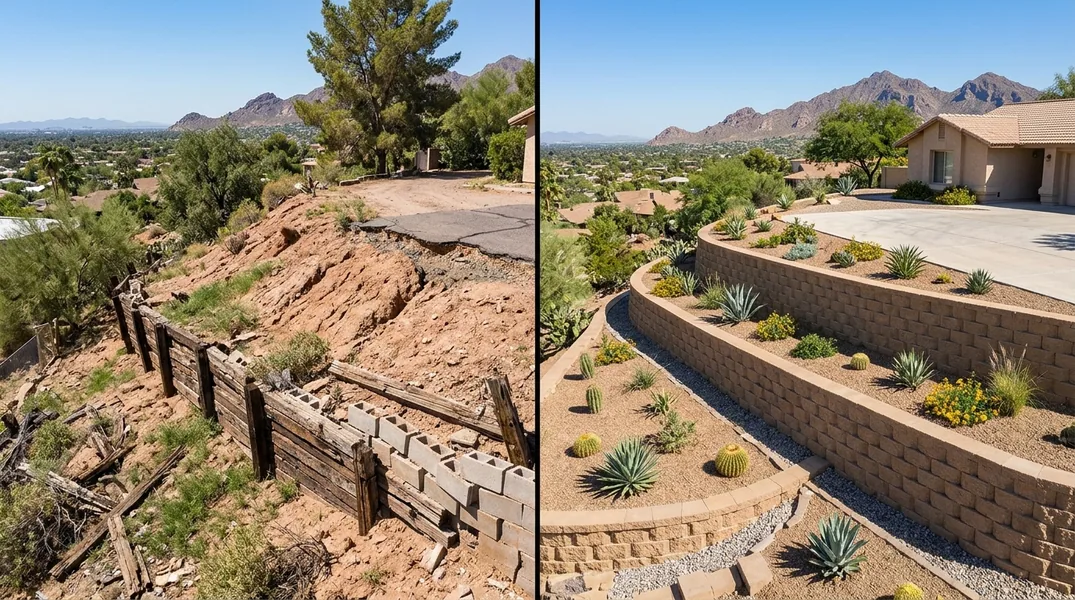
Why Drainage Failures Are the Silent Killer of Retaining Walls in Phoenix
When homeowners in Phoenix think about threats to their retaining walls, they often picture direct impact or structural defects. In reality, the most destructive force is one they can't see: water accumulation behind the wall. During monsoon season, which typically runs from June through September, intense rainfall can overwhelm poorly designed or aging drainage systems, leading to catastrophic wall failure.
Water that accumulates behind a retaining wall doesn't just sit there harmlessly. It creates enormous pressure against the wall structure, a phenomenon known as hydrostatic pressure retaining wall conditions. This pressure increases with every inch of water depth, and when a wall lacks proper retaining wall drainage infrastructure, the consequences can be severe. The soil becomes saturated, swells, and pushes relentlessly against the wall. Over time, this pressure causes cracks, bulging, tilting, and eventually structural failure. Homeowners who ignore these warning signs may find themselves facing expensive Retaining Wall Replacement rather than simple maintenance.
Understanding Hydrostatic Pressure and How Monsoons Trigger It
Hydrostatic pressure is the force exerted by water at rest. In the context of retaining walls, it's the sideways push that water-saturated soil exerts on the wall face. A single cubic foot of water weighs about 62 pounds, and when you multiply that across the height and depth of a retaining wall, the forces become enormous. During Phoenix monsoon storms, which can drop several inches of rain in just a few hours, this pressure can spike dramatically if drainage systems fail.
The problem is compounded by the clay and caliche soils common throughout the Phoenix valley. These dense, compacted soils drain poorly and are prone to swelling when wet. A retaining wall built without adequate drainage considerations will quickly become overwhelmed during heavy rain events. You might notice the wall beginning to lean, developing horizontal cracks, or showing signs of bowing. These are all indicators that hydrostatic pressure is exceeding the wall's capacity to resist it. If you observe these symptoms on your property, it's time to call a professional for evaluation and potential Retaining Wall Repair.
The Critical Role of Retaining Wall French Drain Installation
A retaining wall french drain is one of the most effective solutions for managing water behind a retaining wall. Also called a weeping drain or subsurface drain, a french drain system intercepts water before it can accumulate and create dangerous hydrostatic pressure. The system typically consists of a perforated pipe installed at the base of the wall, surrounded by gravel and filter fabric, that channels water away from the wall structure toward a safe discharge point.
The beauty of french drain systems is that they work passively, requiring no pumps or active maintenance to function. Gravity naturally moves water through the gravel bed and into the perforated pipe, which then directs it away from the wall. For homeowners in Phoenix facing monsoon season, a properly installed french drain can mean the difference between a wall that stands for decades and one that fails within years. During Retaining Wall Installation, builders should always include adequate drainage design. If your existing wall lacks proper drainage, retrofitting a french drain system is often more cost-effective than waiting for failure and requiring complete replacement.
Signs Your Retaining Wall Is Experiencing Drainage Problems
Early detection of drainage issues can save you thousands of dollars in repairs. Watch for these warning signs on your retaining wall. Horizontal cracks that run parallel to the ground indicate that pressure is building behind the wall. Vertical cracks, especially if they're widening, suggest the wall is being pushed outward. Bowing or bulging of the wall face is a serious red flag that hydrostatic pressure has reached dangerous levels. You might also notice water seeping or weeping from the wall face after rain, which indicates that water is moving through the soil behind the wall.
Another common sign is erosion at the base of the wall or soggy soil in the surrounding area. If the ground near your wall stays wet long after rain has stopped, drainage is definitely not working as intended. Leaning or tilting walls are among the most critical warning signs and indicate that failure may be imminent. If you notice any of these conditions, especially during or after monsoon storms, don't delay in getting a professional assessment. Contact Phoenix Retaining Wall at (480) 494-4792 to schedule your free estimate and discuss your wall's drainage needs.
Monsoon Season Preparation: Protecting Your Retaining Wall
As monsoon season approaches each year, Phoenix homeowners should take proactive steps to protect their retaining walls. Start by clearing debris from any existing drainage outlets or weep holes in the wall. If your wall has a french drain system, ensure that the discharge point isn't blocked by dirt, vegetation, or other obstructions. Walk around your property and look for areas where water pools or drains poorly after rain. These are the areas where your wall is most vulnerable during intense storms.
If you're unsure about your wall's drainage capacity or condition, this is an excellent time to have a professional inspection. Many drainage problems can be identified and addressed before monsoon season arrives, preventing costly damage. For homeowners considering Concrete Retaining Walls or other structures, incorporating robust drainage design from the start is far less expensive than retrofitting after problems develop. Regular maintenance, including clearing gutters and ensuring proper grading around your property, also helps direct water away from retaining walls.
When to Call a Professional: Retaining Wall Repair and Replacement Near Me
Not all retaining wall problems can be solved with simple drainage improvements. Sometimes damage is too extensive, or the wall was built without adequate structural support to begin with. If your wall shows severe signs of distress, professional intervention is necessary. A qualified contractor can assess whether Retaining Wall Repair can restore functionality or whether Retaining Wall Replacement is the safer, more cost-effective option.
Phoenix Retaining Wall specializes in diagnosing and fixing drainage-related wall failures throughout the Phoenix area. Our team understands the unique challenges that monsoon season presents to retaining walls in this region. We can design and install comprehensive drainage solutions, perform structural repairs, or build new walls with proper drainage from the ground up. Whether you need emergency repairs after storm damage or preventive drainage installation before monsoon season, we're here to help. Call us today at (480) 494-4792 or visit our website to request your free estimate. Don't wait until your retaining wall fails. Let us help you protect this important investment.
Looking for a professional retaining wall contractor in Phoenix? Phoenix Retaining Wall responds fast for all your retaining wall needs.
Get a Free QuoteOur services: Retaining Wall Installation · Retaining Wall Repair · Retaining Wall Replacement